Cross-border is no longer a side project. It is the next test of your domestic operating model.
Domestic still feels like the sensible default. Familiar network. Familiar contracts. Familiar problems.
But “familiar” is not “low risk”. Domestic economics are tightening at the same time as international buying is becoming normal behaviour. The operational risk is not that you miss a trend. It is that you get pulled into cross-border under customer pressure and end up scaling it with domestic muscle memory, in full view of key accounts.
What domestic muscle memory looks like when it breaks
Cross-border does not usually fail because teams do not understand logistics. It fails because the domestic engine is built to recover quickly from imperfect inputs, and cross-border gives you less room to recover.
A simple example: a booking passes with weak item data and incomplete consignee contact details. In a domestic flow, you can sometimes absorb it. In cross-border, it often surfaces as a hold, and the parcel stops being “a shipment” and becomes a coordination problem.
Here are the chain reaction senior operators will recognise:
- The unit sits in a clearance backlog because the description is vague, value is inconsistent, or consignee details are missing.
- A broker or partner asks for clarification. Ops chase the shipper. Time passes.
- Tracking looks stagnant because events do not map cleanly across networks or the parcel is physically static.
- Customer service sees a WISMO (Where is My Order) spike. Key accounts ask for updates and credits.
- Finance gets pulled into disputes, duty re-bills, write-offs, and chargeback conversations.
Meanwhile, depot and linehaul teams are still expected to hit domestic targets, now with less slack and more escalation noise.
This is why cross-border feels “hard” when it is launched casually. It is not the distance. It is the number of touches and how fast small data and handover defects become commercial issues.
Why 2026 specifically
Two things are changing in ways operators can feel day-to-day.
First, customer expectations are tightening. Marketplace and brand programmes increasingly assume end-to-end visibility, not “handed over to partner”. When milestone events are missing, refunds and chargebacks tend to follow faster, and the cost lands on your teams.
Second, regulation is becoming more operationally immediate. “Data first” now means more pre-advice, more required data elements, fewer workarounds, and more holds when information is incomplete or inconsistent. The practical effect is simple: if the data is wrong, the parcel does not just arrive late. It stops, and your organisation must restart it manually.
Cross-border in 2026 is still winnable, but it rewards operators who build control before they chase coverage.
The new angle: international is where control can still pay commercially
Domestic competition in many lanes can drift towards price and credits. In cross-border, control shows up as commercial advantage you can see in your numbers:
- Fewer credits and fewer churn conversations with international accounts
- Higher win rates when shippers ask about clearance predictability and exception handling
- Cleaner margin management because cost-to-serve is not dominated by rework
- Stronger partner leverage because expectations are explicit and measured
In short: you become the operator that makes international sellable to brands, marketplaces, and e-commerce programmes, because you can prove predictability, not just promise it.
The three minimum controls that make cross-border scalable
You do not need a grand transformation programme to start but it’s not only about you any more you need to be connected to other international parties. Three minimum controls prevent avoidable failures from entering the network.
1) Minimum viable shipment data, validated at booking
Not “better data”. A defined entry standard, checked before induction.
Validated means:
- Completeness checks (required fields present)
- Format checks (phone/email/address structures that work by market)
- Plausibility checks (value, weight, and description that make sense for the goods)
Part 2 will go deeper on what to validate and how to enforce it without turning onboarding into a months-long project.
2) Handover discipline, measured in operational terms
Partner management is partly relationship and partly measurement. In cross-border, the measurable bits tend to decide whether the experience holds up.
Minimum standard:
- Milestone events are defined and mapped end-to-end
- Scan compliance and event timeliness are measured by partner and lane
- Escalations have response-time expectations, not open-ended threads
If tracking goes quiet, it should trigger action quickly and consistently.
3) Exception ownership, with daily triage and weekly root-cause removal
Exceptions will happen. The question is whether they stay contained and whether repeat causes come down over time.
Minimum standard:
- One taxonomy for exceptions across partners
- Named owners by exception type
- Daily triage to keep today’s issues moving
- Weekly loop to remove repeat causes and reduce volume
What “good” looks like for Part 1
A controlled starter service with constraints you can defend:
- Two destination clusters you can run consistently, chosen by a practical mix of factors: strong last mile partners, stable clearance patterns, manageable product mix, and enough volume to learn without swamping the network
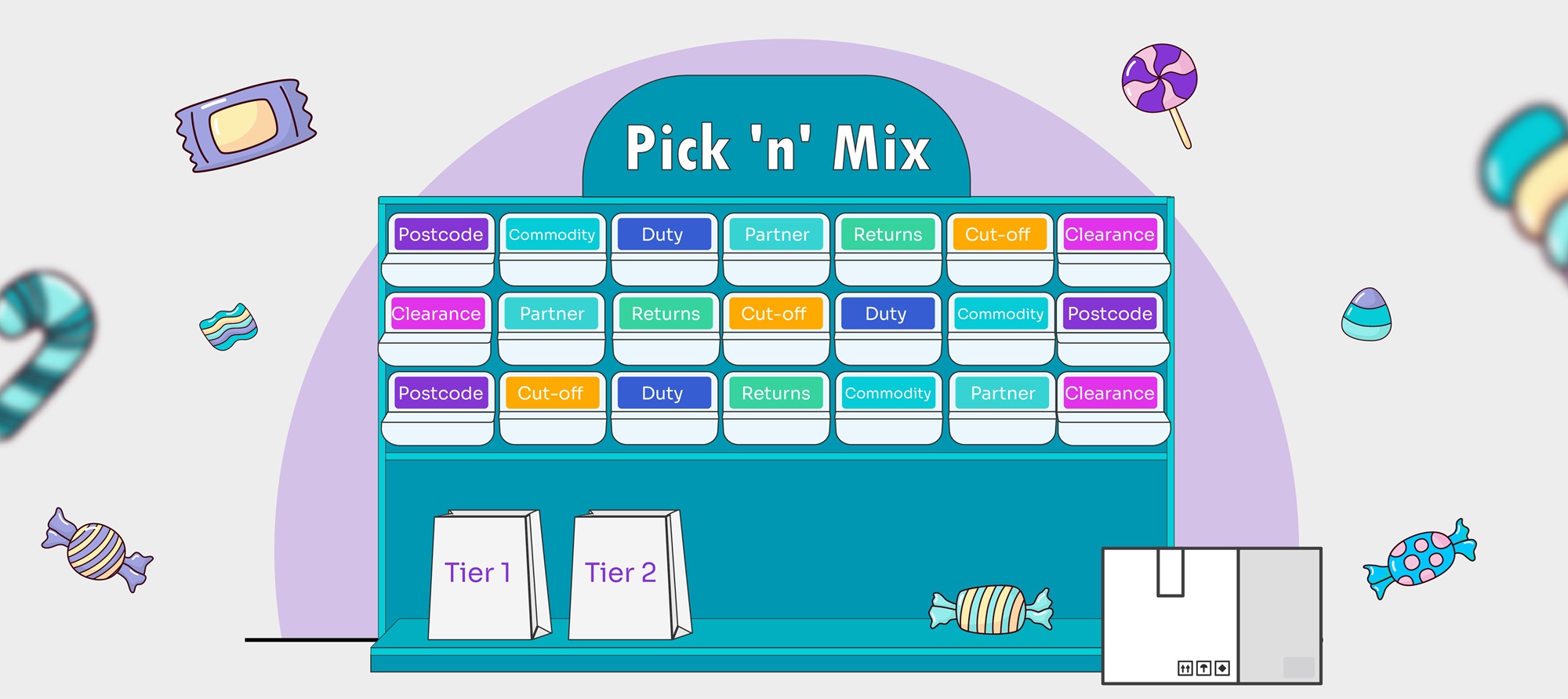
- Two service tiers with clear inclusions and exclusions
- A published definition of “predictable”: transit bands, clearance approach, milestone events, and exception ownership
- A cadence that turns learnings into fixes, not just reports
What to do next (this week)
- Choose lanes you can control: start where you have strong partners, clear handovers, and fewer unknowns in clearance.
- Set the entry standard: validate the inputs at booking and quarantine what fails, rather than letting it travel until it breaks.
- Write the handover rules: milestone events, cut-offs, scan timeliness targets, and escalation response times.
- Stand up the exception rhythm: daily triage for active issues, weekly review for repeat causes and shipper/partner fixes.
- The rollout move is simple: start narrow, instrument it properly, then expand only when the controls hold under volume.
What’s coming in Part 2
Part 2 goes deep on Control #1: Data quality. The minimum viable dataset for cross-border parcels, how to validate it at the front door, and how to stop “customs holds” becoming your default operating mode.