I think airlines get far less credit as retailers than they deserve.
They sell something you can't touch or try, months before you use it, at a price that moves by the hour. People still hand over their passport details, their card and the family holiday without thinking twice.
Their loyalty programmes are some of the strongest relationships in consumer business. Bond's 2025 loyalty report even found that travel was the one sector where people's active memberships actually went up.
Airlines have also taken retail seriously, more than once: in the seat pocket, then on the trolley, and now on the website.
Each version was built by smart people who knew their customers, and each one seems to have carried the same mistake forward.
The airline is the only retailer that knows where its customer will be and when, and its shop doesn't use it.
When I say airline retail, I mean anything an airline sells you that isn't the journey itself. That covers the seat-pocket catalogue, duty-free on board and the online shop. When I say loyalty store, I mean the online shop where members spend miles, or miles plus cash, on things rather than flights.
In short: Airline retail has been rebuilt three times, and each version opened on a catalogue made for a passenger with nothing else to do. The airline is the only retailer that knows where its customer will be and when, weeks in advance. Its loyalty store still asks what you'd like to browse, not where you're going. The opportunity, I think, sits in the first question the shop asks.
Why did the seat-pocket catalogue stop working?
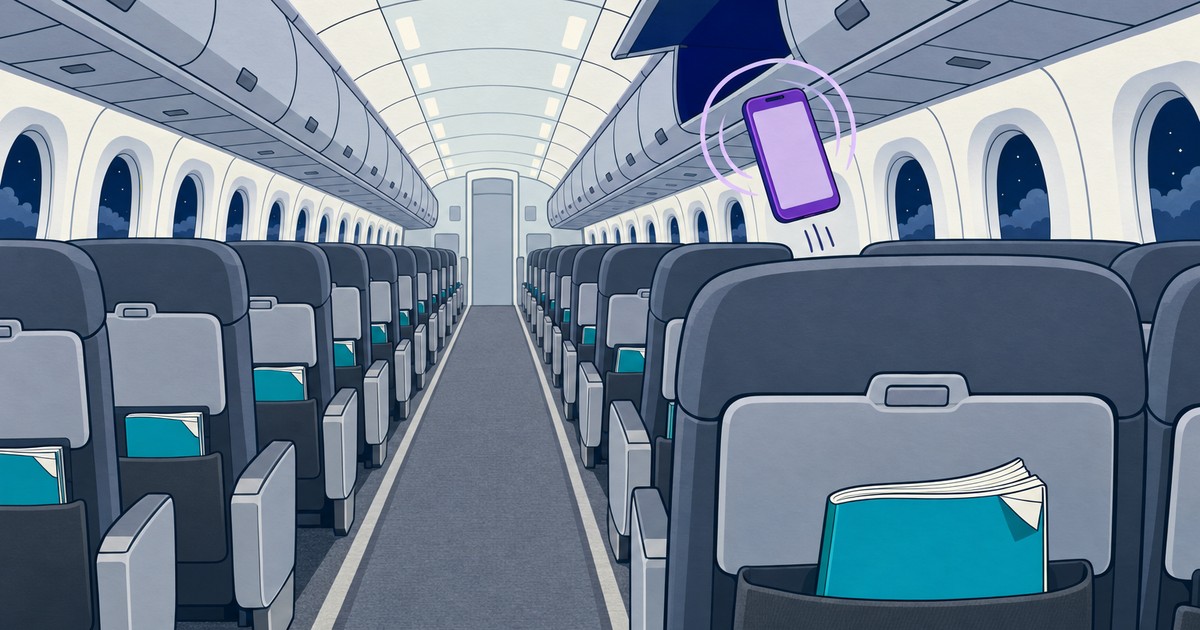
The seat-pocket catalogue stopped working when passengers got their own screens. Its operator's own bankruptcy filing, more than a decade ago, said people browsed it less once devices and in-flight internet arrived. It also said its untailored range left it competing with every shop online.
To be fair to it, the catalogue got a lot right.
It held very little stock of its own and worked as a channel for many suppliers. That's a marketplace in all but name, years before anyone used the word.
It also had a wonderful audience, someone strapped into a seat for hours with nothing else to read.
The filing describes it as the only shopping option passengers had on board, which I think is the honest heart of it.
The format was built for a captive passenger. Once regulators let people keep their devices on from gate to gate, that passenger had every shop in the world in their hand.
The filing also says that carrying all that printed paper had made the catalogue less attractive to the airlines themselves.
I don't read any of that as a story about a bad company. It's a story about a format built for one moment, and that moment didn't survive the phone in everyone's pocket.
Why did duty-free leave the aircraft?
Because the trolley stopped paying for its space. By my count from trade-press reports, at least nine large airlines on three continents have stopped selling duty-free on board since 2014. From 2017 onwards the reasons rhyme: weight and fuel, passengers who buy before they travel, and sales too low for the cart.
The early exits were mostly disagreements with the retail partner. It wouldn't be fair, then, to say every airline walked away because nobody was buying.
The later exits are a bit more telling, because the reasons are so similar. People now look products up at home and compare prices online. Many buy before they even reach the airport, and the airport shops are right there too.
I think the trolley was really the airline's second go at the same idea. It was a curated shelf for a passenger with time on their hands.
The shelf came to your seat, which was clever, but it only worked while you were sitting there. It also asked you to carry whatever you bought for the rest of the trip. That's a slightly strange thing to ask of someone with a connection to make.
As far as I can tell, the airlines that ended it weren't giving up on retail, just on that particular shelf.
What did the airline shop lose when it moved online?
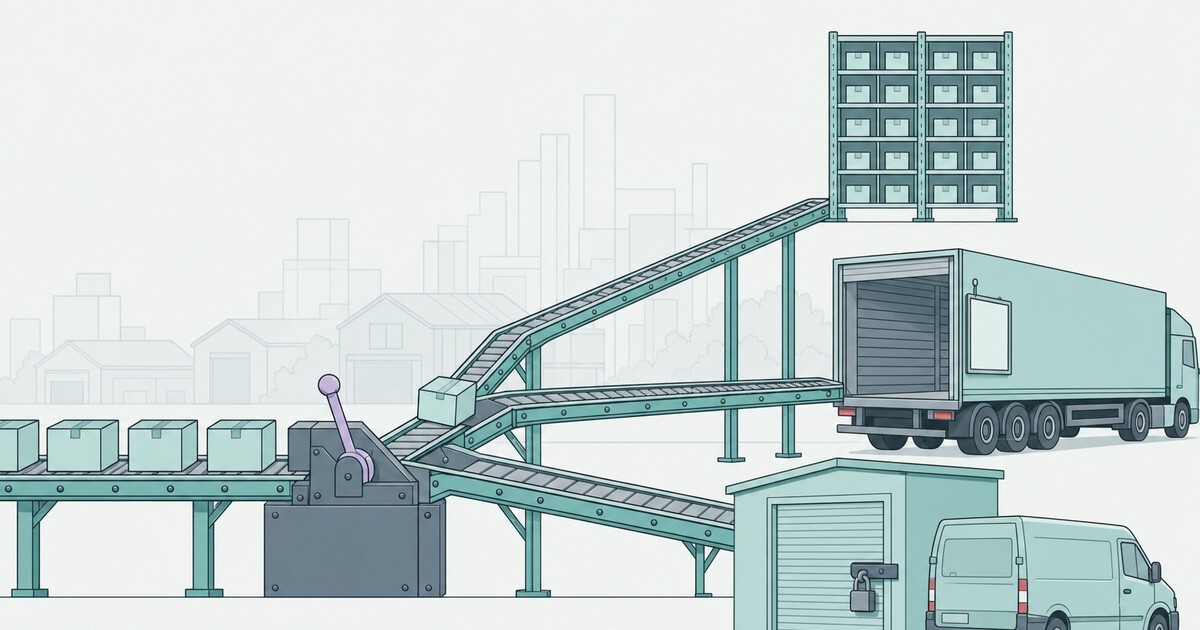
When the airline shop moved online, it lost the one thing the trolley had, which was the trip. A typical loyalty store opens on categories, hides the seller, delivers to a home address days later and leads with the miles. The customer's journey never really comes into it.
Moving online was of course the obvious next step. On paper it fixes everything the catalogue and the trolley got wrong.
What it kept is the catalogue, and the same patterns come up across airline shops again and again.
The first screen is categories, brands and sale items, the same as almost every other shop online.
The seller is usually hidden behind the airline's brand or a single supplier. I find that a shame, because retailers care a lot about how their goods reach people. It came through clearly when we asked supply chain leaders what retailers actually want from the partners who carry their goods.
Delivery goes to the seat or to a home address, and the home option often only works within one country. That's a bit odd for a business that flies people between countries all day. Parcels need more care, of course, and it helps to know what changes when an order crosses a border.
The headline offer is nearly always about the miles, as if the currency were the product.
Coming from logistics, the delivery address is the part that honestly gets me. The airline knows the member is away, because it is the one flying them there. The parcel still heads for the one place they're not.
It's a bit like a friend who knows you're flying out to see them, and still posts your present to your empty house.
Why has a bigger catalogue not fixed it?
Because the problem was never the size of the range. The usual options for an airline, a catalogue store, a bought-in marketplace or pre-ordered duty-free, all change what is on the shelf. The shop itself still opens on a shelf rather than on the trip.
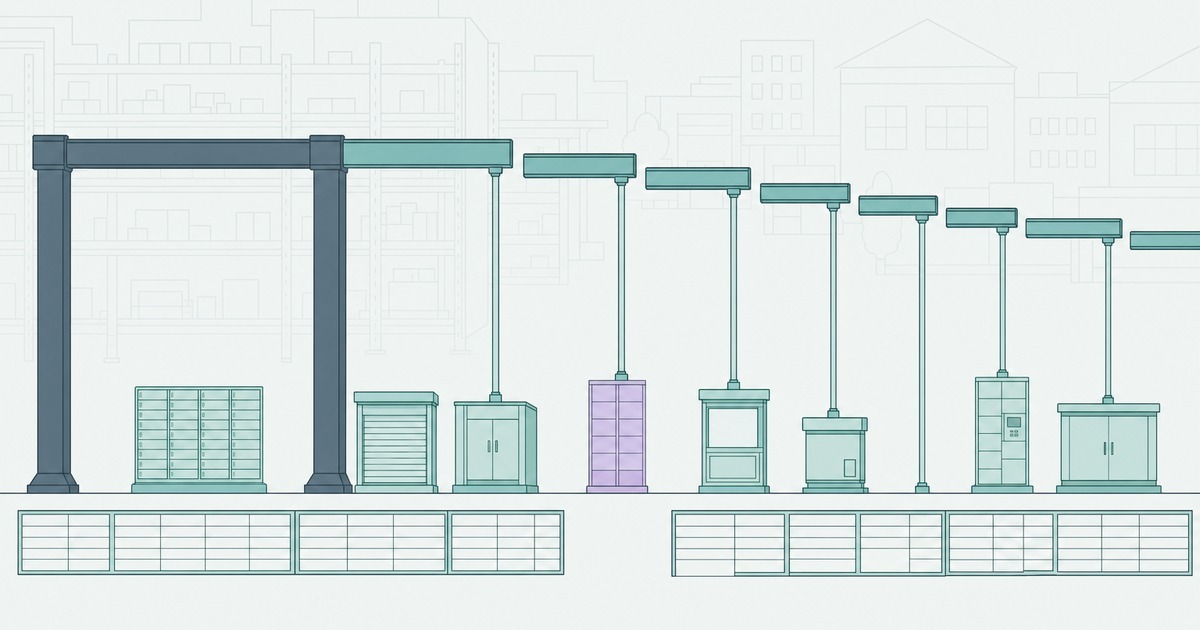
The first is the classic catalogue store, run by the airline or by one supplier. It's simple and it gives members somewhere to spend miles, but it is one supplier deep and has no idea you're travelling.
The second is buying a marketplace in, where many retailers list products and ship them directly. Some programmes have done exactly that recently, and the range jumps overnight, which is a real gain. The first screen is still a grid of categories, though, so the range changes and the experience mostly doesn't.
The third is pre-order duty-free, which is actually the one option that starts from the booking. The trade-off is a narrow shelf, a delivery point that is always the seat, and a bag to carry afterwards.
The fourth is to do nothing, which is probably the most common choice and a perfectly rational one. The programme keeps earning and the store keeps working as a place to burn miles. The members who visit it feel, I suspect, that it wasn't really built for them.
Deloitte's 2025 Consumer Loyalty Survey points the same way. It found that airline members who give one carrier all their airline spend are the least likely to say the programme adds value.
That's why I think innovation in airline retail has been measured as a bigger catalogue, when the real move is a different first question.
What does an airline know that no other retailer does?
An airline knows where its customer will be and when, often weeks in advance: the destination, the landing time and the day they fly home. No other retailer holds that, yet most airline shops never use it, because they ask what you'd like to browse.
Other industries have built a lot on far less.
Starbucks' own investor figures for late 2024 put Mobile Order and Pay at 31% of transactions in the home-market stores it runs itself. As far as I can tell, that works because the app knows roughly when you'll walk through the door.
Tesco's 2024 annual results reported 289 million personalised coupons issued to 7.6 million customers. As I understand it, each one is chosen from what that household actually buys.
Both are working from a moment they can see coming, the walk to the counter or the weekly shop. The airline can see a much bigger moment, and much earlier, which I'd argue puts it ahead of both on paper.
A member who books a Tuesday afternoon flight is telling the airline where they'll be and when they'll land. They're also saying roughly how long they'll stay and when they're coming home.
Most retailers would really love to have that, and the airline already holds it for every booking. Inside the shop, none of it shows up anywhere.
I suspect that's mostly down to how airlines are organised. The booking, the loyalty programme and the shop usually sit with different teams and different systems, and the shop is often run by an outside supplier. The airline knows the trip, but that knowledge rarely reaches the shop's first screen.
Who does the first question turn away?
The first question in many airline shops turns away anyone who doesn't fit it. When the opening screen asks whether you're travelling or a member, some people are sorted out before anyone has helped them. That means the occasional flyer, the person at arrivals and the family at home.
I don't think anyone designed it that way on purpose. A question at the front door usually starts as a sensible way to split the range. Over time it becomes the first thing everyone meets, and it meets the wrong people first.
A 2026 Simon-Kucher estimate looked at who is actually on board. It found that between 50% and 90% of passengers on any flight have never flown that airline, or fly it once or twice a year.
It's worth thinking about who else that design is hardest on. The World Health Organization's 2023 figures put people living with significant disability at about 1.3 billion, roughly one in six of us.
Two habits of airline retail land on top of each other here. The question before any help and the bag you carry on from the seat both fall hardest on anyone who already finds a terminal hard work.
Every gate is a place where someone turns back, and I'd rather a shop helped first and asked later.
If the shop started from the trip, what would its first screen ask?
A shop that started from the trip would probably ask about the journey before it asked about products, because the journey is what the airline already knows. What it would ask next, and who it would be for, is the part I'm still thinking through.
I'd rather leave that open for now and pick it up next week, because I don't think it has a quick answer.
In the meantime, I'd really like to hear how you'd answer it, especially if you run a programme or a shop.
If your shop started from the trip, what would you want its first screen to ask?
Questions we get asked
Why have airlines stopped selling duty-free on board?
Mostly because the trolley no longer pays for its space. Trade-press reports show at least nine large airlines on three continents ending on-board duty-free since 2014. From 2017 onwards the reasons are similar: weight and fuel, passengers who buy before they travel, and sales too low to justify the cart.
Why did the in-flight catalogue disappear?
Because passengers got their own screens. The best-known seat-pocket catalogue's operator said in its own bankruptcy filing that it had been the only shopping option on board. People browsed it less once devices and in-flight internet arrived, and its untailored range was competing with every shop online.
What is airline retail?
Airline retail is anything an airline sells you that isn't the journey itself. It covers the seat-pocket catalogue, duty-free sold on board and the airline's online shop. That includes the loyalty store, where members spend miles, or miles plus cash, on things rather than flights.
Why do airline loyalty stores struggle to engage members?
Because most passengers are occasional flyers, and the loyalty store is usually built as a catalogue for spending miles. A 2026 Simon-Kucher consultancy estimate puts the share of occasional flyers on any flight at between 50% and 90%. It counts passengers who have never flown that airline, or fly it only once or twice a year.
What do airline loyalty shops have in common?
Most open on a catalogue of categories and brands, and hide who is selling. They deliver only to the seat or a home address, and they lead with the miles. Across the airline shops we reviewed in September 2026, none started from the trip, such as where the member is going or when they land.