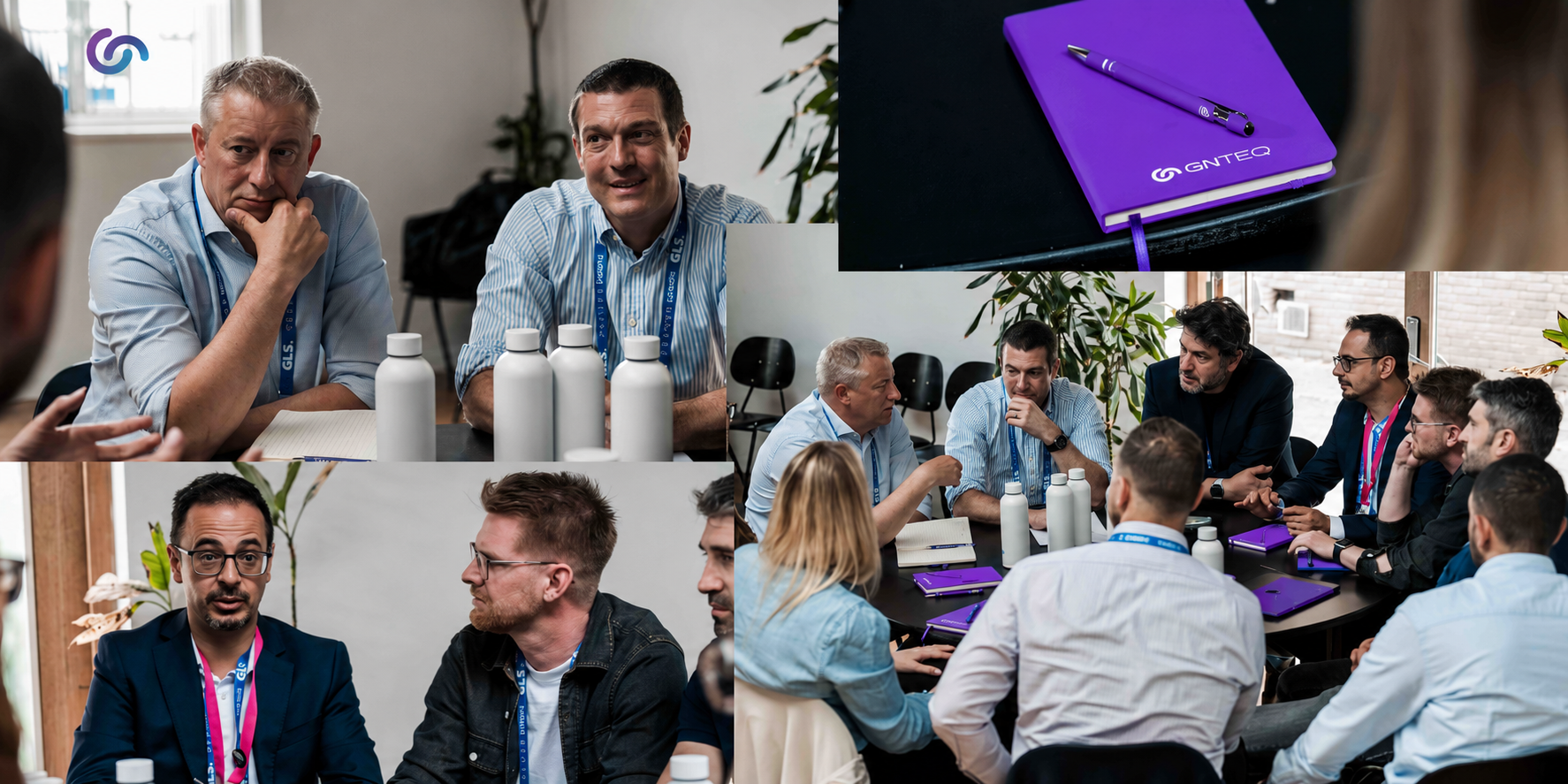
At Deliver Europe in early June, GN TEQ hosted a roundtable that brought together supply chain leaders from across travel retail, FMCG, home furnishings, apparel and sporting goods. The brief was simple: put the slides away and say what's really going on. What came out of the hour wasn't a wish list for faster vans or cheaper rates. It was something more useful, and more honest.
Here's what the people running these operations told us.
Speed and price stopped being the argument
Every person around the table agreed on one thing early. Speed and cost are now the price of entry, not the reason anyone wins or keeps the work. What separates a good partner from a forgettable one is whether they stay on the journey when things get hard.
One travel retail operator, a fourth-generation family business, put it plainly. "If you squeeze everyone on cost and spend all your time bashing them, then comes the next Covid, or whatever happens next, you won't be the first they pick up the phone for."
That last line carries more weight than it first appears. When capacity tightens, during peak, or a port backs up, or a network buckles, carriers don't share the pain evenly. They protect the customers they value. If you've spent three years driving a partner to the floor on price, you're at the back of that queue. The cost shows up as scrambling for backup carriers at spot rates, splitting volume across networks you don't know, and in the worst case missing the peak window you built the whole quarter around. The saving you booked in March is gone by November.
A procurement consultant on the supplier side made the same point from the other direction: the hardest part of finding a partner now is building the relationship, because there's less trust between companies than there used to be. Buyer and supplier, opposite sides of the table, landed in the same place.
The shift is from fast to reliable
Customers, especially younger ones, are moving away from raw speed and towards something they can plan around. An FMCG supply chain leader described it well. People would rather be told an accurate window they can rely on than be promised speed that may not turn up. "If he says he comes tomorrow, then he comes. Two days is also fine, but I want to rely on it."
The same leader shared a line that should make any brand pause: "We hear a lot of 'we love your products, but we don't like doing business with you,' because of the service." The product can be excellent and the relationship can still fail at the door.
The door is where the money leaks
That last mile matters more than most boardrooms count. The room shared stories of impolite drivers and damaged goods, including one delivery that ended with a fridge door torn clean off.
Follow what happens next and you see the real number. A home furnishings leader walked through it. The damaged item triggers a collection, a refund or a replacement to fund, and a one-star review that then sits on the product page steering the next shopper away. And the customer who had that experience usually doesn't say anything. They just never reorder. The delivery was the cheapest line in the whole chain, and it took out the most expensive thing in the business, which is the customer who was going to come back.
One size fits nobody
There was firm agreement that a single standard carrier setup no longer works. Service needs to match the product and the customer. The pet nutrition example said it best: a regular bag of food can wait, but a medical product is life or death and needs to move fast. The same logic applies to customers. A wholesaler doesn't need express; a small clinic with an emergency order does.
There were sensible caveats. A sporting goods leader pointed out that this works for things people buy often and less well for big, infrequent purchases. Nobody buys a bike every month. The point stands. Treating every order the same is a decision, usually an expensive one.
The honest bit about AI
This was the strongest current in the room, and it wasn't enthusiasm. As one leader observed, there wasn't a single stand at the show that didn't claim to be doing AI now. Several drew the comparison to the rush around sustainability reporting a few years back. Everyone races in, then realises the foundations weren't ready and has to reverse out.
The foundations are not abstract. One operator described asking a simple question, what is on this truck, and waiting four hours for an answer. That's the data an AI model would be sitting on top of. As the consultant put it, are you trusting the data behind it? "It's like launching a rocket blindfolded and saying, okay, where did it go right?"
There was a sharper worry underneath. If everything moves to automation, what happens to the relationships and account management these same leaders had just told us mattered most? You can't onboard a customer who needs trust using a tool built to remove the people. The conclusion wasn't anti-technology. It was a request to fix the basics first.
Measuring is not the same as improving
A related frustration: dashboards everywhere, action nowhere. "You look at it, those are the numbers, and then you close it." If nothing changes as a result, the measuring is just noise. One leader described being brilliant at reporting emissions on every route and order, while lacking the resources to actually reduce them.
What we took away
We didn't run this session to sell anything. We ran it to listen. Retailers aren't asking for magic. They're asking for partners who stay, service that fits the order, technology built on data they can trust, and measurement that leads somewhere.
We'll leave the last word with the room. Near the end, one of the leaders looked round the table and said, "I feel we all feel lighter after this." Everyone laughed, because everyone recognised it. The problems are shared. So, it turns out, are the answers.
---
GN TEQ runs these conversations because the work gets better when retailers, suppliers and post offices say the quiet part out loud. If any of the above sounded like your week, we'd like to hear how it's playing out in your operation. Get in touch today