Two tiers beat ten promises: turning cross-border into something you can sell without creating a mess later. Cross-border launches often fail in the gap between what sales sells and what ops can run.
It usually starts innocently enough. A shipper asks, “Can you do Italy?” Someone says yes. Then “Italy” turns into five different versions of the service depending on postcode, commodity, duty position, and whichever delivery partner is covering the final mile that week. By the time the volume turns up, nobody can explain the rules properly, and every team is filling in the gaps on the fly.
This is what that looks like on a Tuesday. The service desk is chasing held parcels with three different partners, all using different statuses for what is basically the same problem. Ops is switching handover points late in the day to try to protect delivery performance, and scans start coming through in the wrong order. Sales wants “just this one special cut-off” for a top account. Finance is asking why credits have spiked on one lane even though volume is up. Then you get to the QBR and spend half the meeting arguing about what the service was supposed to be in the first place.
Why this matters
More shippers are asking cross-border providers to present something that can be bought and managed without endless translation. In practice, that usually means clearer service definitions, written commitments, and less room for everyone to interpret the offer differently once things go wrong.
If you cannot explain your cross-border offer clearly and run it the same way each time, every commercial conversation becomes bespoke. That may feel flexible at the start. Later it usually looks like service disputes, credits, and a lot of wasted time arguing over what was and was not included.
What breaks when you move from domestic to cross-border
Domestic products are usually settled. Cut-offs, tracking milestones, claims, and credits policies are normally fixed. The network is known. Exceptions still happen, but the chain is shorter and the operating rules are more stable.
Cross-border often starts in a much looser state. Different handover partners upstream. Different clearance paths. Different last-mile outcomes. Tracking discipline that changes depending on where the parcel is in the chain. Goods eligibility that shifts by market. Liability that gets muddy when parcels are held, refused, or returned, especially once duties and taxes enter the conversation.
At low volume, teams can patch over this. At scale, it starts showing up in places nobody can ignore. More broker touches. More rework. More credits per 1,000. More time spent untangling whether the parcel failed, the lane failed, or the promise was never properly defined to begin with.
What good looks like
Productising cross-border is less about dressing the offer up neatly and more about putting some control around what can really be run consistently. The point is not to create more service options. It is to make fewer promises, make them explicit, and stop pretending every lane can be sold like a domestic parcel product.
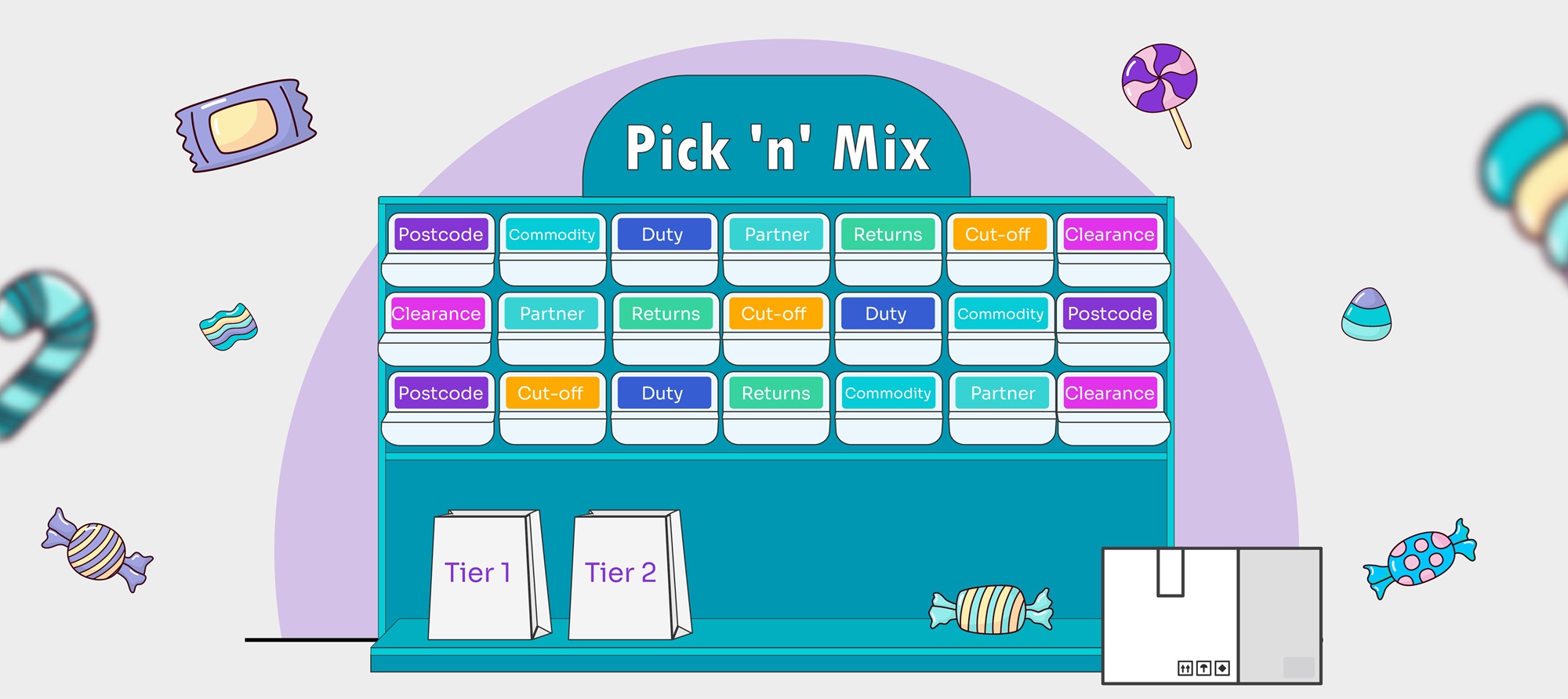
1) Two service tiers with explicit trade-offs
Two tiers is a decision.
Tier 1: Predictable, premium
You protect control by narrowing the moving parts. Coverage is tighter. Partner count is lower. Booking standards are stricter, so weak descriptions, missing HS codes where needed, or incomplete consignee details do not get waved through and become a clearance or support issue later. Cut-offs are tighter. Tracking expectations are tighter. Support is more proactive because the whole point is to keep variation down.
Tier 2: Standard, broad
You accept more variability, but not as a free-for-all. Coverage is wider. Cut-offs are looser. Partner variation by lane is more likely. Proactive support is lighter. You are also clearer about what happens when a shipment is held and where your intervention stops.
This is usually the point where “ten promises” starts creeping in. Bespoke SLAs for individual shippers. Special cut-offs agreed in side emails. One-off waivers that somehow become precedent. Lane exceptions that everybody remembers differently six weeks later. Two tiers does not remove all complexity, but it does stop that complexity from becoming the product.
2) Lane-level commitments that are written down
Cross-border still needs lane detail, but it should sit inside the tier rather than override it every time a customer asks for something awkward.
For each lane, publish a simple lane pack that both commercial and ops use. Transit bands rather than a single-point promise. Clearance approach and likely outcomes, whether that means duties due, held for inspection, missing data, or released. Tracking updates and when they should appear. Cut-offs that reflect how the lane runs, not how someone wishes it ran during a sales call.
This keeps the chain readable from end to end: upstream handover, clearance, then last mile. Without that, the same parcel can look late to one team, held to another, and “awaiting partner scan” to everyone else.
3) Pricing that reflects cost-to-serve and exception handling
Cross-border cost-to-serve is not flat, and pretending otherwise is usually where margin starts leaking.
It moves with partner touches, brokerage involvement, documentation burden, returns likelihood, and shipper data quality. Some lanes are simply more expensive to run well. Some shippers generate more manual work than the rate card suggests.
If pricing does not reflect that, the losses tend to show up in familiar places: high-touch lanes, immature shippers with poor booking data, and goods that attract inspection or document queries. Price by tier and by lane and be clear about what level of support and exception handling is included.
What to do next
1) Define Tier 1 and Tier 2 in operational terms
Write the definition so ops, commercial, and finance can use the same one without each adding their own interpretation.
That means transit bands, cut-offs and how firmly they are enforced, what coverage is included by default, which tracking updates are part of the offer and how quickly they are expected, and how exceptions are handled, including escalation path and operating hours.
Be honest about what is really Tier 1 capable. Putting a premium badge on a lane that still runs like a patchwork service is a good way to create credits and awkward review meetings.
2) Publish an onboarding checklist and eligible goods policy
A lot of avoidable friction starts at booking, usually with weak item data.
Make the required inputs hard to miss: item description and value, HS code where needed, consignee details including destination ID requirements, invoice and documentation rules, and restricted goods screening questions. Then link that directly to the operational consequence. Weak booking data does not stay at booking. It turns into held freight, broker queries, manual intervention, and time lost chasing answers after uplift, when fixing the problem is slower and more expensive.
Pair that with an eligible goods policy: what is allowed, what is not, and what needs pre-approval. That gives ops some cover and gives sales a line they can stop pretending not to see.
3) Define claims, refunds, and credits upfront
If this is not defined early, it gets defined later in an argument.
Set policy for what counts as late against transit bands and by tier, what evidence is needed for claims, which outcomes qualify for refunds or credits, how duties and taxes are treated when parcels are returned, refused, or abandoned, and who owns merchant and customer communications, and by when.
It does not need to be overbuilt. It does need to be clear enough that the same issue is not judged three different ways depending on whether it lands with sales, service, or finance.
Metrics that tell you the truth
Track these by lane and tier, not as one blended average:
- margin by lane and tier
- cost-to-serve, including partner touches, broker touches, and rework hours
- onboarding cycle time from “yes” to compliant shipping
- credits per 1,000, and the main reasons behind them
If there is one metric to watch every week, make it margin by lane and tier. It tends to show quite quickly when the product definition and the operating reality have started drifting away from each other.
Next: Part 6 tackles the two topics that usually decide whether cross-border becomes profitable or just hard work.