A forwarder chooses a cross-border parcel channel lane by lane rather than company-wide, on product, price and proven performance. The postal channel is now a priced, measured product rather than a treaty rate, a commercial carrier sells you a delivery promise and owns it, and your own destination partner costs the least per parcel and the most to run.
That choice used to make itself. For a decade the postal channel was the cheap treaty rate and the low-value parcel travelled under a de minimis threshold, so few forwarders revisited either assumption. Both went inside a single year. When US Customs and Border Protection began enforcing the end of de minimis on 29 August 2025, it recorded that only 5% of de minimis shipments had entered through the mail, and that the rest already moved through commercial carriers. (CBP, 29 August 2025)
This piece assumes you have the volume, and where that volume comes from in the first place is a separate question. It does not re-argue the regulatory backdrop, already covered. What follows is the choice between three routes into a destination country, one lane at a time.
What actually changed in the postal channel?
Four things, all inside the last twelve months. None is a rule you comply with. They are a product changing its price basis and its measurement, which is why they land on the rate card.
The United States stopped treating low-value mail as a free pass. CBP's release of 29 August 2025 put the mail channel at 5% of de minimis volume, and pointed foreign postal operators at qualified third parties who could collect and pay the duty. The share it did carry now needs a duty mechanism behind it before you can quote a price.
The postal network's answer was a product rather than a protest. By 2 October 2025, Global Trade Alert counted 71 postal operators with United States suspensions still in force, 10 full, 43 goods only and 18 partial, and six that had already lifted theirs by moving to a Postal Delivered Duty Paid route. (Global Trade Alert, 2 October 2025) What you could promise last autumn depended on which list your destination operator sat on, and the lists moved while you quoted.
The Universal Postal Union then rewrote how posts are paid and measured. Its 2025 Congress approved an Integrated Remuneration System for 2026 to 2030, brought delivered duty paid into the postal product set, and set out that "destination operators will be able to self-declare rates charged to sending operators, based on domestic tariffs". Small packets move to payment on items received rather than average weight, mandatory scans rise from six to twelve, and parcel remuneration is linked to quality of service. (UPU, 18 September 2025; UPU, 16 December 2025) So the postal line on your rate card is no longer a number you roll forward. The operator at the far end can reset it, and is now paid to hit the promise you quote against it.
Europe is on a slower clock. The Commission confirmed on 13 November 2025 that the EUR 150 customs duty exemption goes, as early as possible in 2026, with an e-commerce handling fee collected from November 2026, and the amount is not on its page because it has not been settled. (European Commission, 13 November 2025) A European lane you price this quarter carries a fee you cannot yet size, with a start the Commission has put at November 2026.
Is the postal channel still worth using in 2026?
Yes, where the lane suits it, and not for the reason it used to be.
The channel lost the one thing that made it the default. It gained three that make it sellable. A duty-paid product a merchant can be quoted on. A price set per item rather than per average kilo. And a delivery standard that is paid against rather than merely reported.
The six that resumed did it by moving to a duty-paid product, not by waiting for the rule to change.
So the postal channel did not die. It stopped being a default and became a selection. That is a harder job for you, because a default needs no evidence and a selection does.
Postal, commercial or your own partner: what each one actually is
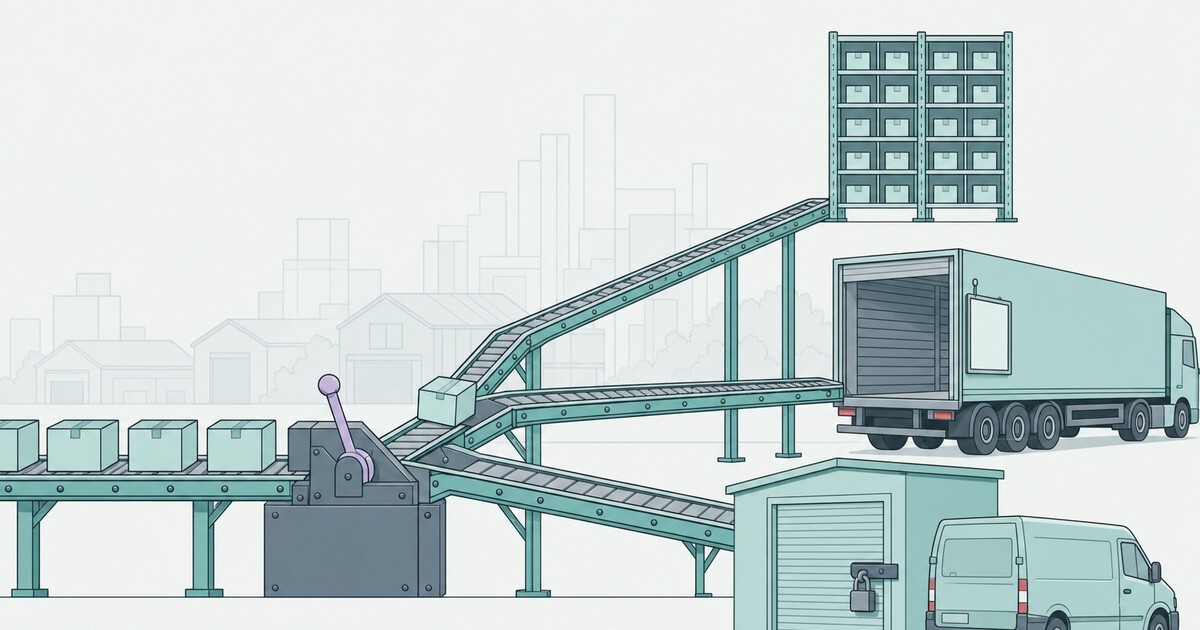
These are not three prices for the same thing. They are three products, with three different owners of risk.
| The postal channel | A commercial carrier | Your own destination partner | |
|---|---|---|---|
| What you are buying | A national operator's domestic delivery, entered through its own system | A finished international product with a service level attached | Direct injection into a local carrier you contract yourself |
| How the price is set in 2026 | Destination operators self-declare rates off domestic tariffs; small packets paid per item received (UPU, 18 September 2025) | A negotiated contract, with surcharge and rate-increase drift in it | Your fixed cost, divided by the volume you actually run |
| Who owns the delivery promise | The destination operator, and from the 2026 to 2030 cycle that ownership is measured and paid against | The carrier. You resell it | You, entirely |
| Tracking depth | Mandatory scans rise from six to twelve, with remuneration linked to quality of service (UPU, 18 September 2025) | The carrier's own event set, in the carrier's own codes | Whatever you instrument, since no mandated scan set comes with a last-mile contract |
| Duty position | Delivered duty paid is now a postal product rather than a workaround (UPU, 18 September 2025) | A priced product option | Yours to arrange and yours to carry |
| Typical failure mode | Scan gaps and capacity at handover, plus suspension risk you cannot influence (71 operators had US suspensions in force in October 2025, and six more had already lifted theirs via PDDP) | Margin moves when their surcharges move, and you find out after the invoice | Fixed cost and an exception queue that both start before the volume does |
| When it wins | Reach and density into residential addresses, where the promise can be a range rather than a date | Lanes where the merchant is buying a date and will pay for it | Lanes with enough volume, and a long enough horizon, to earn back the fixed cost |
How is the price of a lane set on each channel?
Last year's rate card is wrong, and inflation is not why. The basis changed underneath it.
On the postal channel, the destination operator self-declares its rates off its own domestic tariffs, so your cost moves when that operator's commercial position moves rather than when a treaty cycle turns, and small packets are paid on items received. Neither sits comfortably in a rate card built around kilo bands.
On a commercial carrier, the price is a contract with drift in it. You know the base rate. You find out about the surcharges later, and the practical answer when a lane stops working is to connect a new carrier or destination partner without a six-month integration.
On your own destination partner there is no rate to compare, only a fixed cost and a volume assumption, and the honest version of that arithmetic uses the volume you have.
One thing has to be settled before the three can be compared, and it is not a pricing question: your duty position is an operating model decision, not a pricing line. Settle it, then price against it.
Who owns the delivery promise on each channel?
This is the real selection criterion. Ask it before you ask about price.
On the postal channel the destination operator owns it, and under the 2026 to 2030 remuneration cycle a post is paid partly on whether it kept it. A post that delivers reliably is now paid more than one that does not, which gives you something you can reasonably ask for: performance on that lane, over a period long enough to include a peak, rather than a network average: on-time against their own scan data, lane by lane, month by month. An operator who can only give you a network figure is telling you something. The post at the far end is making the same calculation from the postal operator's side.
On a commercial carrier, the carrier owns it and sells it to you, so remember you are reselling and price the difference. On your own destination partner you own it, which is why the lane pays best when it works. It is also why a bad month on it is entirely yours.
The merchant's customer is judging something narrower than you might expect. The International Post Corporation's 2025 shopper survey, published on 13 January 2026 across 30,970 shoppers in 37 countries, found that clear information on delivery charges before purchase is essential for 61% of consumers, ahead of the roughly half who say the same about low customs duties. (IPC, 13 January 2026) A number you can state at checkout is worth more to the merchant than a smaller one you cannot, and which channel you chose decides whether you can state it.
What does each channel fail like?
Every channel fails. The question is whether it fails in a way you can absorb.
The postal channel fails on scan depth and on capacity at handover, and it carries a suspension risk you cannot influence. Seventy-one operators found that out in 2025.
A commercial carrier fails quietly, through your margin, and this is the one most forwarders underestimate because nothing appears to go wrong. The parcels arrive. The merchant is content. Then a fuel adjustment moves, or a residential surcharge widens, or a dimensional rule is applied differently at one origin, and a lane you priced at a workable margin in January is running thin by April without anyone deciding anything. You find out from the invoice rather than from the operation, and by then you have billed your merchant at the old number. The correction is either an awkward conversation or a quiet loss, and most teams take the quiet loss on a lane they are otherwise pleased with.
Your own destination partner fails first on cost and then on exceptions, both from day one, before the volume does. If you are pricing that option seriously, the fuller version of the objection is in the three gaps you actually buy.
None of this is new. The USPS Office of Inspector General set out why the postal channel lost share in November 2023: terminal dues rising after the 2019 reform, data requirements, easy rate shopping on platforms, and direct injection routing around posts. (USPS OIG, November 2023) US-only and nearly three years old, and none of the four has been reversed.
Most forwarders end up running more than one, and that is the hard part
Almost nobody running cross-border parcel at scale runs a single channel. Choosing is the easy part. Running three at once is where it gets hard.
Picture a Tuesday morning. A merchant calls about four parcels: one postal into Spain, one on a commercial carrier into Germany, two through your own partner in the Netherlands. Your team opens three tracking screens, because the events are in three vocabularies and none of them agrees on what "in transit" means. Twelve mandatory postal scans instead of six is better visibility for the merchant and more work for you: more events to map, in somebody else's codes, on a lane you did not choose. At the next desk somebody is reconciling last month's carrier invoice against a postal settlement on a different cycle and a partner invoice that is a spreadsheet. The merchant wants one answer about four parcels, and a bill he recognises.
That is the real work, and it is systems work rather than commercial work. The fix is one integration to each channel, one harmonised event set behind the three vocabularies, and one status and one invoice reaching the merchant. A rate card that can hold three price bases is part of that, not the whole of it.
Can a merchant get one status, one invoice and one answer about a parcel, without knowing or caring which channel it travelled on?
The order to decide a lane in
Six questions, asked in this order, per lane. The order matters more than the answers, because asking them out of order is how a channel gets chosen on price and defended on promise.
- What is the merchant buying, a date or a price? If it is a date, the postal channel is a candidate only where the destination operator's measured performance supports one.
- Who has to own the promise for that to be true, and are you willing to be that party?
- What tracking depth does the merchant's own channel demand, and can the channel produce it without a scan you do not control?
- What is the duty position, and is it a product you can buy here or a capability you build?
- How is the price set on each channel here, and which of those bases can your rate card hold today?
- What does failure look like, and what is the stop rule that moves this lane elsewhere?
If you cannot answer the last one, do not open the lane. Choosing a channel you cannot exit is how a lane becomes permanent by accident, and by month four that is a lane nobody defends, nobody can reprice and nobody will move, because the merchant integration and the label logic now sit on it. Agreeing the exit costs nothing, which is probably why everybody skips it.
Where GN TEQ fits
Saudi Post Logistics used to deliver the last leg of parcels somebody else owned. It now runs its own end-to-end cross-border commercial parcel service on our platform, and the numbers are the change in what kind of operator it is: international commercial shipments from zero to more than three million, delivery success from 85% to 98%, merchant onboarding from over two months to two or three days. The UPU published the 98%, measured over four months, and the onboarding figure, in October 2024 and April 2025; the before-figures are from the Logistics Middle East Awards 2025 entry that was shortlisted that January. The channel decisions in this piece were its decisions too, taken lane by lane. What made them survivable was the platform underneath them.
For a forwarder, the same platform is one integration engine that connects a postal operator, a commercial carrier or your own destination partner in hours, against the three to six months a legacy build takes per carrier. Harmonised tracking that maps three event vocabularies into one status a merchant can read. The duty-paid product and the customs data handled at the parcel, live in more than 180 countries, which tells you where the route exists rather than whether your lane will work. More than 25 million parcels a year already running through it, and four-fold scaling through peak. And, as one of the views rather than the point of it, what each lane earns. The shape of it is on the cross-border platform page.
None of that answers question one for you. Only your merchant can, and that is where this starts.
Questions we get asked
What is the difference between the postal channel and a commercial carrier for cross-border parcels?
The postal channel buys you a regulated national operator's own domestic delivery, entered through its system, with that operator owning the delivery promise at the far end. A commercial carrier sells you a finished international product with a service level attached, and you resell its promise to your customer. The practical difference is who carries the failure and whose tracking events you are quoting when a merchant asks where a parcel is.
Is the postal channel still viable for cross-border e-commerce in 2026?
Yes, on the right lanes, though not for the reason it used to be. The channel lost the treaty rate that made it the default and gained a duty-paid product, per-item remuneration for small packets and, under the Universal Postal Union's 2026 to 2030 remuneration cycle, parcel pay linked to quality of service for the first time. It is now a commercial product you select, price and measure like any other, rather than a route you fall back on.
What is PDDP and how does postal delivered duty paid work?
Postal delivered duty paid means the duty is paid upstream, on the sending side, rather than collected from the customer at the door. It is how six postal operators had resumed United States services by 2 October 2025, while 71 still had suspensions in force. For a forwarder the commercial point is that duty stops being a collection problem and becomes a pricing problem, and whoever quotes the duty-paid price carries the risk of quoting it wrong.
When should a forwarder use its own destination partner instead of a postal or commercial carrier?
When the lane has enough volume and a long enough horizon to earn back a fixed cost, and when you need to own the delivery promise rather than resell somebody else's. Contracting a local carrier yourself gives you the lowest cost per parcel and the deepest control over tracking and exceptions, and it starts costing before the volume arrives. If you cannot say what the lane will carry in twelve months, it is usually the wrong one to build yourself.